One Simple Question Can Lead to Endless Support: Why Every CAC Must Screen for Military Affiliation at Intake
November 3, 2026
By Dr. Lolita Allen
Director, Military Community Advocacy (MCA), Department of War
Advocates, clinicians, and multidisciplinary professionals working with Children’s Advocacy Centers (CAC) share a vital mission: supporting parents in helping children heal and thrive. Within the Office of the Deputy Assistant Secretary of War for Military Community and Family Policy (MC&FP), the Military Community Advocacy Directorate develops comprehensive, trauma-informed policy and frameworks that address the unique needs of military-connected individuals, including children. Over the past two years, our nationwide “No Wrong Door” approach has improved our support of military-connected children and their families; however, the ability to tailor trauma-informed treatment approaches to address individual needs requires early identification of children’s military affiliation.
According to the 2024 Military Community Demographics Profile, there are over 1.4 million military-connected children living in the United States. While these children are remarkably resilient and adaptable, they routinely face unique, high-stress challenges, including frequent relocations, prolonged parental deployments, and isolation from extended family support networks. NCA reports that, as of 2025, 39% of CACs routinely screen for military affiliation during the intake process. This means that in more than 60% of cases nationwide, staff do not ask about a child’s military connection, limiting the ability to provide customized support and access to specialized resources.
To close this gap, the Military Community Advocacy Directorate is launching a nationwide movement this November, in alignment with National Veterans and Military Families Month, to elevate universal screening to 100%. By implementing a single, standardized question at every intake—“Are you or anyone in your immediate family currently affiliated with the military?”—CACs can immediately unlock a specialized system of support, streamline coordination of services based on individual needs, and improve recovery and readiness outcomes for military families.
The Undetected Military Family
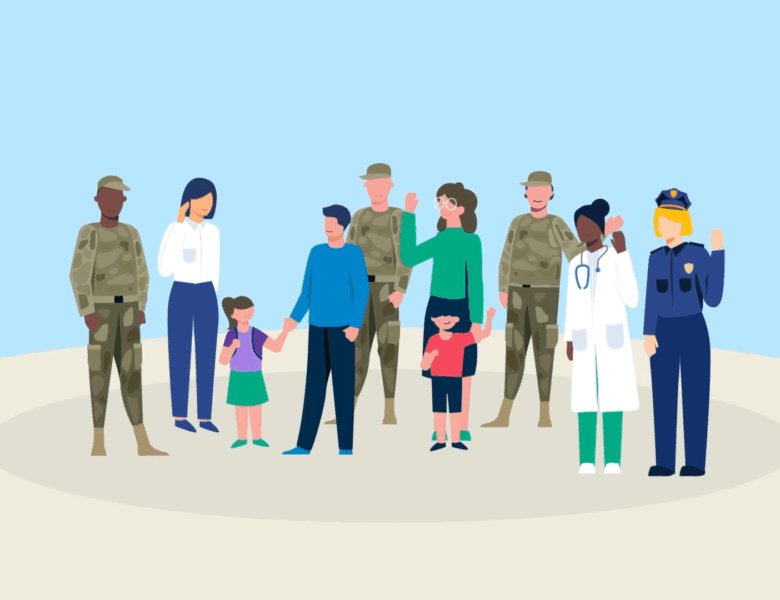
One of the most persistent misconceptions in child welfare is that Service members and their families reside exclusively on or near large military installations. In reality, the modern military footprint is highly decentralized. While a portion of the force lives on base, hundreds of thousands of active duty, National Guard, and Reserve families are fully integrated into civilian neighborhoods, rural areas, urban centers, and other communities nationwide, often far removed from any physical military installation or specialized resource hub. Without a standardized, universal screening protocol, many of these geographically dispersed families may not be visible to the systems designed to support them.
Clinical and Operational Impact of Military Screening
Identifying a family’s military connection is more than an administrative exercise; it is a vital catalyst for specialized clinical and operational pathways. From a system perspective, consistent documentation of military affiliation enables CACs to highlight service gaps, identify emerging regional trends, and leverage empirical evidence to secure dedicated funding and build stronger, integrated systems of care between civilian communities and the military. From a family readiness perspective, this practice offers three specific advantages:
– Access to Specialized Resources: Early identification secures rapid access to specialized resources. The Department of War and the individual military services maintain an expansive network of family support programs, counseling services, and specialized clinical resources. CACs can immediately bridge families to these robust, cost-free benefits at the precise moment they are needed.
– Seamless Multi-Agency Collaboration: Early screening also facilitates multi-agency collaboration. It allows CAC staff to establish immediate coordination with the military’s Family Advocacy Program, and, when appropriate, this early connection enables communication with Military Criminal Investigative Organizations and installation command teams. This unified front ensures that military families receive comprehensive local support while preserving the specialized benefits they have earned.
– Continuity of Care: Because military families typically relocate every two to three years, a CAC armed with this demographic context can proactively prepare for an upcoming Permanent Change of Station. By coordinating directly with the receiving installation’s Family Advocacy Program or CAC at the new duty station, providers can transfer case management seamlessly, therefore preventing gaps in therapy and protective oversight.
Screen Once, Track Throughout
To truly support these families, CACs must adopt a “Screen Once, Track Throughout” operational mindset:
1. Implement a mandatory, standard question for every family, every time: “Is anyone in your immediate household currently serving in the military (Active Duty, National Guard, or Reserve)?”
2. Train staff to clearly document the response in the case management system so that advocates, forensic interviewers, and clinicians utilize this data from day one.
3. Incorporate the military connection as an active discussion point during multidisciplinary team (MDT) case consultations. Track all referrals to military resources and maintain continuous communication with military partners throughout the life of the case.
A Call to Action for CAC Leaders
This November, let’s pledge to close the gap. The Military Advocacy Directorate challenges every CAC director, intake coordinator, and MDT member to ask:
– Are we routinely asking about military affiliation at intake?
– Is this information documented consistently in our tracking systems?
– Do our staff know who to contact at the local military installation to coordinate support?
By increasing the screening rate from 39% to 100% and continuing to coordinate with community partners, CACs can help ensure all military-connected children receive the specialized care and support they need to heal and thrive.
__________________________________________________________

Dr. Lolita Allen is the Director, Military Community Advocacy (MCA) programs for the Department of War. In this role, she provides leadership, management, and oversight of congressionally mandated programs and policies focused on preventing, intervening in, and responding to domestic abuse, child abuse and neglect, and problematic sexual behaviors between children and youth. Her portfolio spans more than 250 military installations, where she champions coordinated, prevention-focused efforts to strengthen military families and safeguard force readiness.
Career:
Dr. Allen brings over 27 years of experience supporting military families across the Army, Navy, and Air Force. She began her career in 1996 as a graduate intern at Navy Base Anacostia and has held multiple clinical and leadership roles in the Family Advocacy Program and related areas of prevention and intervention, at the installation and headquarters level. Her work reflects a deep commitment to advancing trauma-informed care, building resilient communities, and shaping policy that centers on the well-being of service members and their families.
She is a Licensed Clinical Social Worker in the states of Virginia and Georgia.
Education:
Dr. Allen earned her Bachelor of Science degree in Psychology from Fayetteville State University, her Master of Social Work degree from the Howard University School of Social Work, and her Doctorate from University of Southern California, Dworak-Peck School of Social Work.