Halloween Safety Goes Beyond Candy: Keeping Kids Safe
October 6, 2026
By Adam Varahachaikol,
National Children’s Alliance
For kids, Halloween is supposed to be fun. There are costumes to wear, candy to collect, and parties to attend.
For parents and caregivers, though, Halloween can come with a different set of concerns. Is the costume safe? Will drivers see my child? Who will be supervising the party? What if my child encounters a situation that makes them uncomfortable?
Halloween gives us an opportunity to talk with children about safety in a way that doesn’t have to be scary. In fact, many of the conversations surrounding Halloween about boundaries, trusted adults, and speaking up when something doesn’t feel right are lessons kids can carry with them all year long.
Safety starts with the adults
Kids should be able to enjoy Halloween without feeling responsible for keeping themselves safe from situations they aren’t equipped to handle.
That responsibility belongs to the adults around them.
Trusted adults can help create safe environments by knowing where children are, who they are with, and what activities they are participating in. For younger children especially, active adult supervision is important during trick-or-treating, parties, and other Halloween activities.
It’s also important to remember that safety isn’t simply about teaching kids to avoid strangers. Children are more likely to encounter concerning situations involving someone they already know. Rather than focusing exclusively on “stranger danger,” we can give kids a broader understanding of what safe and unsafe behavior looks like.
Halloween is a good time to talk about boundaries
Costumes, parties, and gatherings can mean more opportunities for physical interaction. Remind children that they are allowed to have boundaries with their bodies, even during celebrations.
They don’t have to hug someone, sit on someone’s lap, or participate in physical contact that makes them uncomfortable simply because an adult asks them to.
Children can practice simple phrases like:
– “No, thank you.”
– “I don’t want to.”
– “Please stop.”
– “I need to go find my mom/dad.”
Most importantly, let kids know that they can always come to a trusted adult if something happens that makes them uncomfortable.
These conversations aren’t about making children afraid of other people. They’re about helping children understand that their feelings matter and that the adults responsible for them will listen.
Make sure children know who they can turn to
One of the most important things we can give children is a network of trusted adults.
Before heading out for Halloween, talk with your child about who they can go to if they become separated from you, feel uncomfortable, get hurt, or simply need help.
For older children who may be going out with friends, establish a plan for where they will be, and how they can contact you. Make sure they know they can call you for help even if they are worried that they might get in trouble.
And perhaps most importantly, remind them:
They will never be in trouble for telling you about something that happened to them.
Creating that sense of safety at home can make it easier for children to speak up when something is wrong.
Don’t forget the everyday Halloween hazards
There are also plenty of traditional Halloween safety considerations.
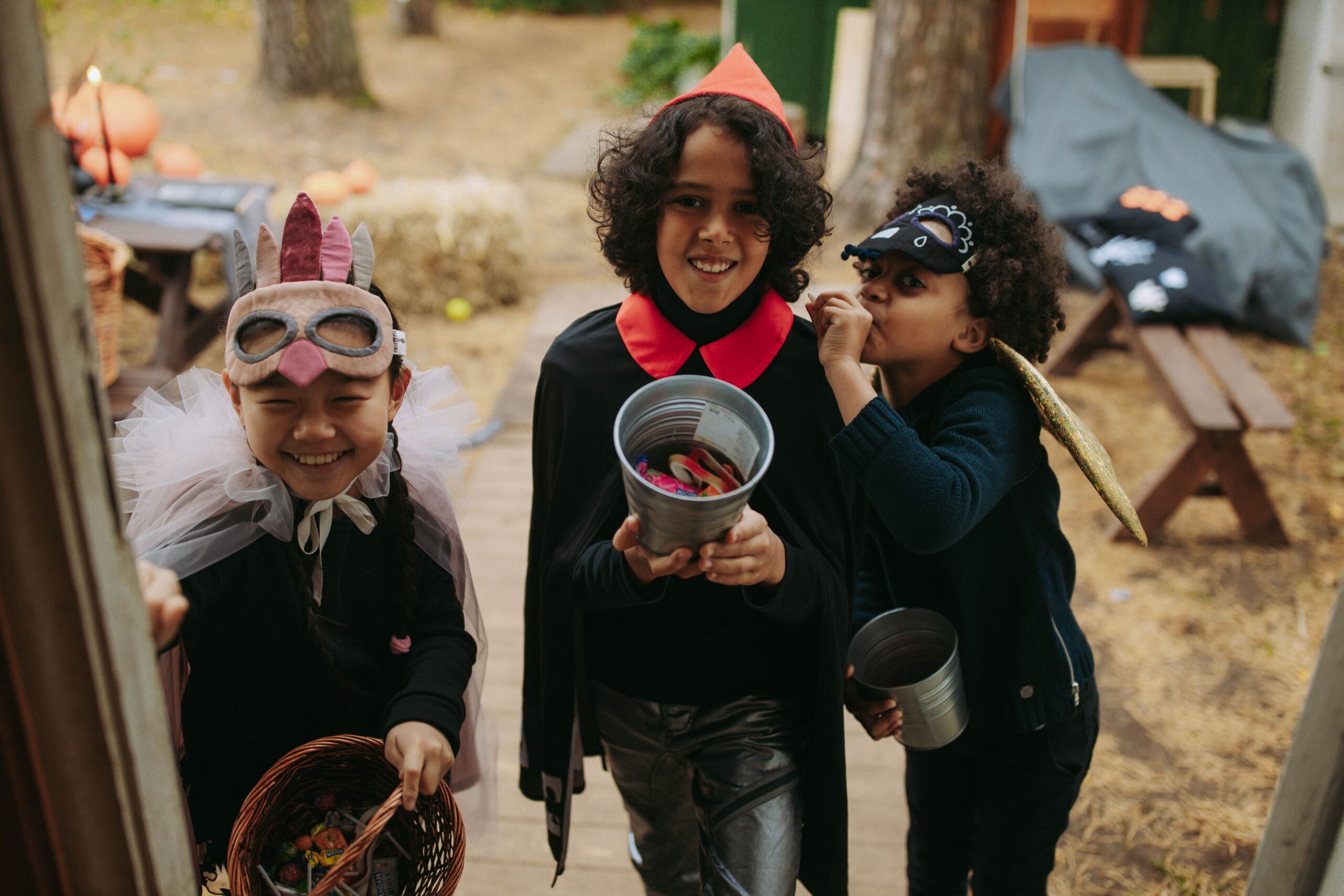
Make sure costumes fit properly and don’t create a tripping hazard. Kids should have masks that allow them to see clearly, and costumes should be visible to drivers when children are walking after dark. Flashlights, reflective materials, and adult supervision can all help them stay visible.
If your child is trick-or-treating without you, establish boundaries about where they can go and when they should return. Remind them to stay with their group, and use sidewalks and crosswalks whenever possible.
And, of course, there’s the candy. Check treats before younger children eat them, particularly if there are allergies or other dietary concerns.
Think before you post
Halloween also creates another kind of safety consideration: what happens to all those photos?
It’s natural to want to share pictures of your child’s costume or Halloween adventures. Before posting, however, consider whether the image includes information that could identify your child’s location, school, neighborhood, or routine.
As kids get older, it can also be a good opportunity to involve them in decisions about what photos of them are shared online. Teaching them about digital boundaries is another part of helping them understand that they have a voice in how their personal information and images are used.
The goal isn’t to make Halloween scary
Halloween is a time for kids to have fun. Safety conversations shouldn’t take that away.
We don’t need to teach children to be afraid of every unfamiliar person, every situation, or every Halloween tradition. Instead, we can teach them that trusted adults are there to help them, that they have the right to establish boundaries, and that they can always speak up when something doesn’t feel right.
And as adults, we have an even bigger responsibility to listen when children speak, take their concerns seriously, and create environments where they feel safe asking for help.
The best Halloween safety lesson may not be a warning about what could go wrong. It may simply be reminding a child:
You can always come to me. I will listen. And I will help you.
Because every child deserves a Halloween filled with fun costumes, laughter, and way too much candy and most importantly, the confidence that the adults around them are there to keep them safe.
__________________________________________________________
Remember, even if you suspect child abuse, contact your local Children’s Advocacy Center who can walk you through what happens next. Go to www.nationalchildrensalliance.org, and click here to find your local CAC.

Adam Varahachaikol is a content creator with 20 years experience in copywriting, editing, video production, and digital marketing across multiple industries, and is passionate about the CAC movement. He enjoys spending time with his family, drawing, music, gaming, and coaching youth sports.