In Movement: 7 Questions with Julie Porterfield | Emerald Coast Children’s Advocacy Center | Florida
September 1, 2026
Welcome to In Movement! In this segment of our blog, we interview thought leaders from within our own organizations – from CACs and MDTs and partner agencies – to gain insight into how they have furthered the movement, and how the movement has changed them. We look forward to benefiting from the lessons they’ve learned, the challenges they’ve faced, and the future they envision for themselves, our centers and teams, and the children and families we serve.
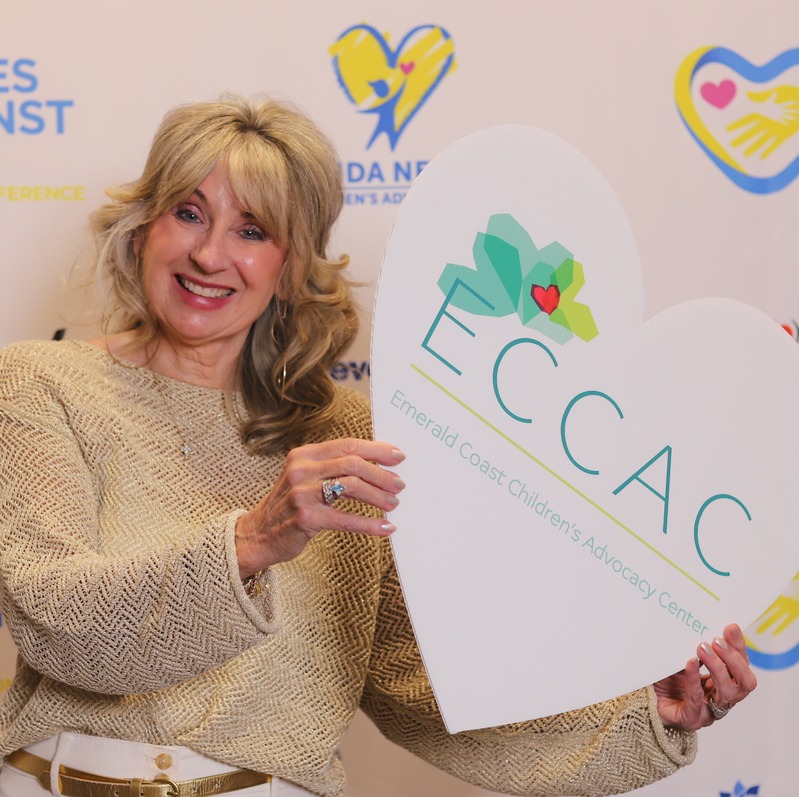
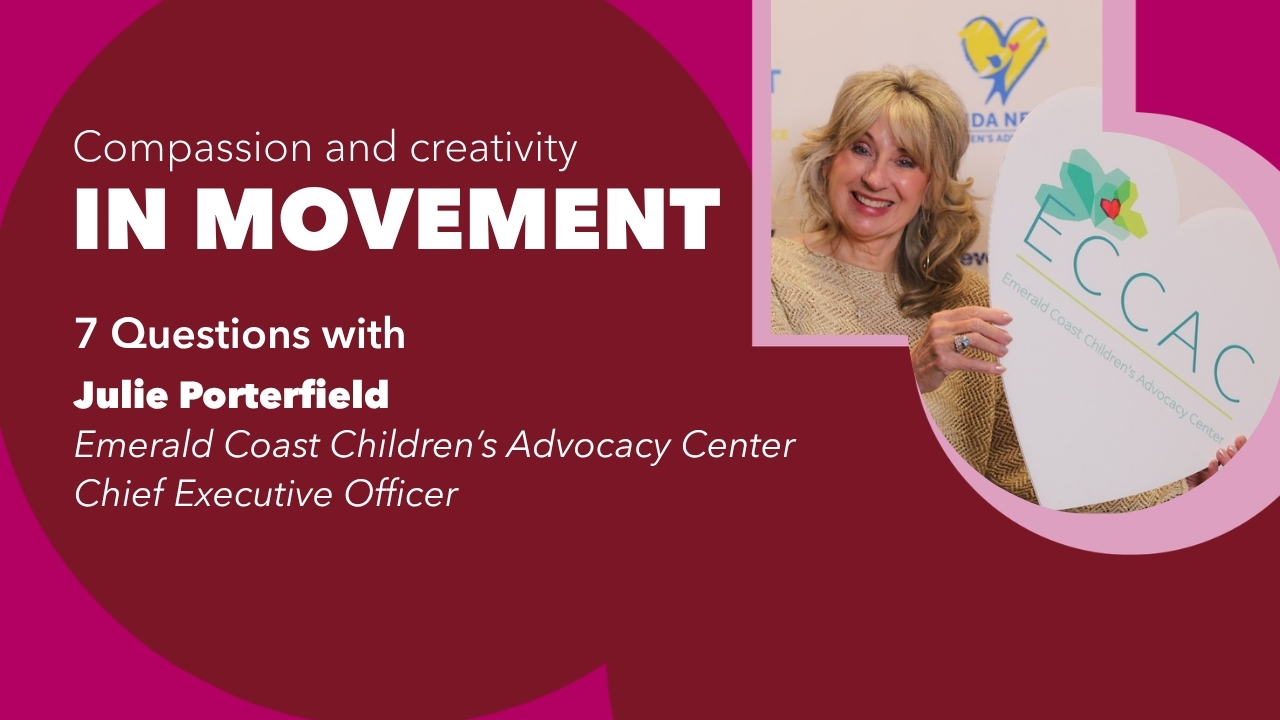
For more than 26 years, Julie Porterfield has dedicated her career to supporting children and families impacted by abuse and neglect. Her journey began at the State Attorney’s Office, where she spent 17 years serving as a victim advocate alongside survivors of violent crime, including children, families of homicide victims, and survivors of sexual assault. Through those experiences, she developed a deep commitment to advocacy and helping others navigate some of life’s most difficult challenges.
Today, Julie serves as Chief Executive Officer of Emerald Coast Children’s Advocacy Center, where she continues that work by helping children and families find hope, healing, and support. Under her leadership, the organization has navigated significant challenges, including the successful relocation and restoration of services after a flood and fire forced the evacuation of its Niceville facility. Through it all, the focus has remained on ensuring children and families receive the care and services they need.
Julie is also passionate about prevention and empowering children with the knowledge and confidence to recognize unsafe situations, particularly in an increasingly complex digital world. Her vision for the future is simple but powerful: a world where every child can live free from abuse, neglect, and exploitation.
We asked Julie to participate in our Member Spotlight Interview Series. Read on to learn more about her journey, what inspires her work, and her hopes for the future of children and families.
Why did you choose this as a career?
For 17 years, I worked at the State Attorney’s Office, where I had the privilege of serving as a victim advocate, walking alongside individuals during some of the most difficult moments of their lives. I worked with survivors of violent crime, including families of murder victims and survivors of sexual assault, both children and adults. I was honored to support those who had experienced unimaginable trauma—sitting with them in their grief, listening in silence when words were not enough, and being a voice for them when they no longer had the strength to speak for themselves.
Through those experiences, I came to understand that this work was much more than a job. It was God’s calling on my life—to advocate for those who are most vulnerable and to bring hope to those who are hurting.
During those 17 years, I also pursued my education, earning both my Bachelor’s degree and Master’s degree in Public Administration. The combination of experience, passion, and education prepared me for the role that God had planned for me as CEO of the Emerald Coast Children’s Advocacy Center.
For the past 26 years, I have had the privilege of advocating for children and families impacted by abuse and neglect. Every child who walks through our doors reinforces the importance of this mission. Their courage, resilience, and capacity to heal continue to inspire me each and every day.
My hope is that one day Children’s Advocacy Centers will no longer be needed. I look forward to the day when we can hang the “Closed for Business” sign because every child is living free from abuse, neglect, and exploitation. Until that day comes, I will continue to fight for children, champion their voices, and work tirelessly to ensure they have every opportunity to heal, thrive, and experience the childhood they deserve.
What’s something interesting you’ve learned recently?
A family member recently experienced heart issues and a pacemaker was implanted. The technology was intriguing. It represents an extraordinary intersection of biology, engineering, and medicine. Scientists learned how the heart’s electrical system functions, engineers developed miniature computers and batteries that can operate reliably for many years, and physicians perfected techniques to place the device with minimal disruption to the body. Today’s pacemakers can often transmit data remotely to a physician, allowing ongoing monitoring without frequent office visits.
The pacemaker became much more than a medical device, it gave a very important person in my life the opportunity to thrive, remain active, and enjoy a healthy, fulfilling life. It is amazing to think that such a small piece of technology could make such a profound difference, restoring not only heart rhythm but also confidence, energy, and precious years with loved ones.
What’s a challenge you and your colleagues feel proud of solving?
A few years ago, our Niceville Center faced an unexpected crisis when a flood and fire forced us to evacuate our 13,000-square-foot facility. Overnight, our team and agency partners were tasked with relocating all services off-site while ensuring that children and families continued to receive the support they needed.
Despite the magnitude of the challenge, we were fully operational within a week, with minimal disruption to direct services. From inventorying and disposing of damaged property to coordinating with three insurance adjusters, contractors, and emergency funding partners, our team navigated countless immediate and long-term challenges with professionalism and determination.
What could have been a devastating setback instead became a powerful example of crisis management at its finest. Through collaboration, adaptability, and an unwavering commitment to our mission, we successfully managed a complete renovation of the 13,000-square-foot facility in just nine months.
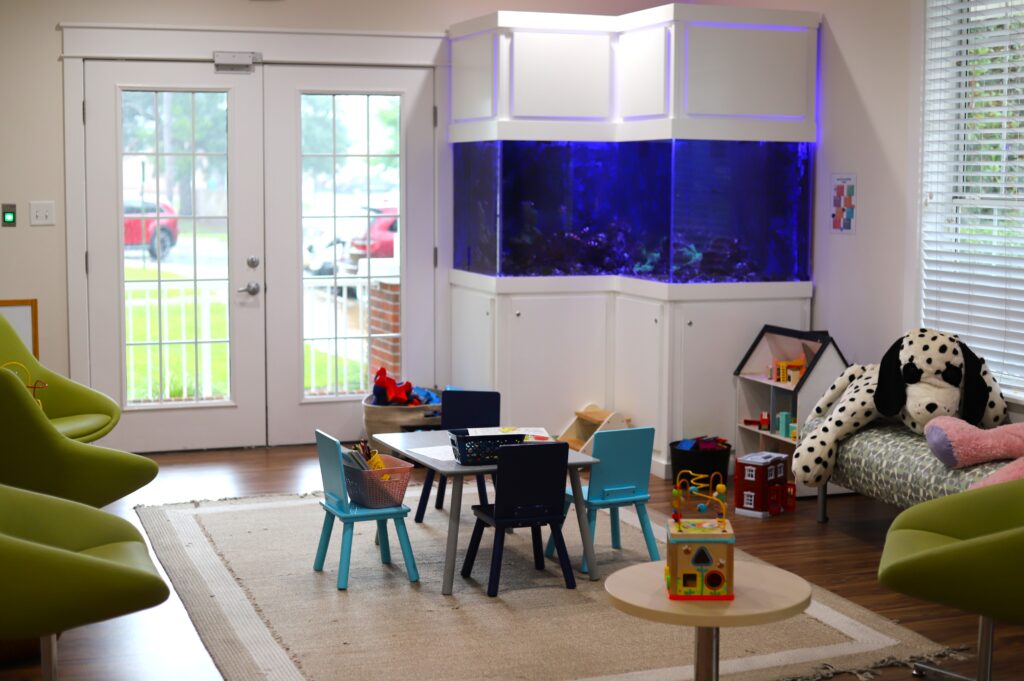
When we returned, we were welcomed into a beautifully refreshed space designed to continue providing hope and healing to the children and families we serve. The experience reinforced the strength, perseverance, and resilience that define our organization. In many ways, our journey mirrored that of the children we serve every day—facing adversity with courage, adapting to change, and emerging stronger than before. Our team’s unwavering commitment ensured that, even during one of the most challenging periods in our history, the mission never stopped and the children remained our highest priority.
What about your work inspires you and keeps you going?
The children we serve each and every day are the reason for this work. Over the years, I have had the privilege of witnessing not only their healing but also their growth. I have attended birthdays, graduations, first communions, and most recently, the wedding of a young woman I first met through my work as a child.
There is something profoundly inspiring about watching children overcome the trauma they have experienced and grow into confident, resilient adults. Their journeys are reminders that healing is possible and that hope can prevail even in the face of tremendous adversity.
While I am blessed to have one son of my own, I often say that I have many children. The thousands of children whose lives have intersected with mine through this work have left an indelible mark on my heart. To witness their milestones, celebrate their successes, and see them thrive is one of the greatest honors of my life and a constant reminder of why this mission matters.
What’s the biggest need for kids you think we can meet in the next five years?
One of the greatest needs facing children today is empowerment. We live in a world where adults cannot always be present to protect children from every danger they may encounter. As a result, it is essential that children are equipped with the knowledge, skills, and confidence to recognize unsafe situations and take action to protect themselves.
This need is particularly urgent in the online world, where children face growing risks from predators, exploitation, cyberbullying, and other digital threats. Technology has created incredible opportunities for learning and connection, but it has also introduced dangers that previous generations never experienced.
What do you think the ideal future looks like for kids?
Ideally, Children’s Advocacy Centers would no longer be needed. Our greatest success would be the day we could hang a “Closed for Business” sign because every child is living free from abuse, neglect, and exploitation.
Until that day comes, we remain steadfast in our commitment to the children and families who need us. We will continue to be a safe place for child victims, providing hope, healing, advocacy, and support during some of the most difficult moments of their lives.
What’s next for you?
I remain committed to envisioning new and innovative ways to respond to the evolving needs of child abuse victims in our community. As challenges change, so must our approach—always seeking better solutions, stronger partnerships, and more effective ways to provide hope, healing, and protection for children and families.
________________________________________________________