In Movement: 7 Questions with Sarah Matthews | Red River Children’s Advocacy Center | North Dakota
August 4, 2026
Welcome to In Movement! In this segment of our blog, we interview thought leaders from within our own organizations – from CACs and MDTs and partner agencies – to gain insight into how they have furthered the movement, and how the movement has changed them. We look forward to benefiting from the lessons they’ve learned, the challenges they’ve faced, and the future they envision for themselves, our centers and teams, and the children and families we serve.
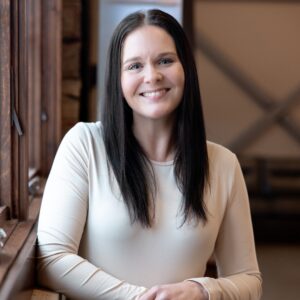
When Sarah Matthews learned about the opportunity to join Red River Children’s Advocacy Center (RRCAC), she knew it was the right next step. After more than a decade in nonprofit leadership, Sarah was looking for a role where she could combine her experience with her passion for supporting children and families. Today, she leads an organization that serves children and families across North Dakota, Minnesota, and South Dakota.
In recent years, RRCAC has experienced significant growth, expanding its team, increasing access to trauma-informed mental health services, and strengthening support for children and families throughout the region. Through that growth, Sarah and her colleagues have remained focused on providing compassionate, specialized care while building capacity to meet increasing community needs.
Sarah is also passionate about prevention and community education, particularly helping caregivers and other trusted adults feel more confident recognizing warning signs, having difficult conversations, and supporting children’s safety and well-being.
Read on to learn more about Sarah’s journey, the challenges and successes of serving a growing region, and her vision for a future where every child feels safe, valued, and supported.
Why did you choose this as a career?
I chose this career because I believe all children deserve to be safe, heard, and supported. I want children to be safe, loved, and cared for appropriately, and to remember their childhood as a positive experience. They are our future.
My commitment to this work is also deeply personal. I am a survivor of child abuse, and that experience has shaped how I understand the importance of safety, belief, and support for children.
My path into human services also began early in life through my family’s advocacy work. When my brother was diagnosed, at age one, with autism, my family founded the non-profit North Dakota Autism Center. This was at a time when there were no services available in the state of ND. We worked to expand access to care, including helping advance the licensing of BCBAs in the state and supporting efforts toward autism insurance reform so that evidence-based treatment could be covered and accessible to families. We really paved the way for autism services in ND.
After more than a decade in various leadership roles, including supporting quite a large team of over 65 staff, I was ready for a new challenge. When I learned about Red River Children’s Advocacy Center, I knew I wanted to be part of it. It felt right to step into a role where I could directly support children in crisis, children whose experiences, in many ways, reflected what I had seen personally and professionally throughout my career.
I interviewed for the position not only because of my professional background in non-profits, but because I have the passion and energy to ensure children like me, my brother, and so many others receive the protection, care, and voice they deserve.
What’s something interesting you’ve learned recently?
One of the most interesting things I have learned recently is how often caregivers genuinely want to protect children but may not know what questions to ask or what warning signs to look for. In many cases, they may have a basic understanding of prevention concepts but still lack the confidence, language, or practical skills to have these conversations with their children, often because they were never taught how to have them themselves.
When speaking to community members in our area, there are additional barriers that make these conversations difficult, such as strained or limited relationships with children, a child’s resistance to discussing sensitive topics, or uncertainty about how to begin the conversation in a way that feels natural and safe.
These realities have reinforced for me that awareness alone is not enough. Caregivers need practical tools, real-life examples, and supported opportunities to build confidence in having these conversations. We already see the importance of this during advocacy sessions at RRCAC, where providing guidance and education to caregivers can make a meaningful difference in their ability to support and protect their children.
This insight has directly influenced work I have been developing around community-based training and facilitated conversations. The goal is to provide parents, caregivers, and community members with access to professionals who can offer practical guidance and answer real-world questions in a safe, supportive environment. While this initiative has not yet been fully launched, I see strong potential for it to grow through word of mouth and community engagement, ultimately helping normalize prevention education and strengthening child safety across our region.
What’s a challenge you and your colleagues feel proud of solving?
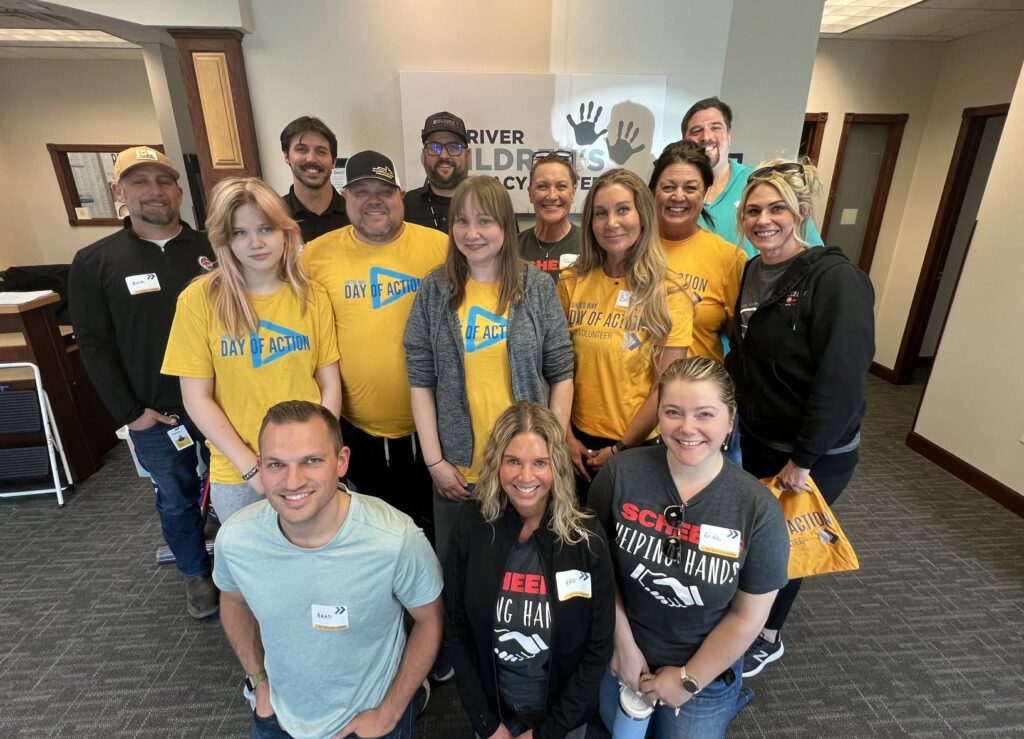
Our team is proud of meeting a rapidly increasing demand for services while simultaneously navigating significant organizational growth and expansion. Since 2023, RRCAC has experienced three consecutive years of approximately 22% growth, resulting in a 66% increase in the number of children and families served.
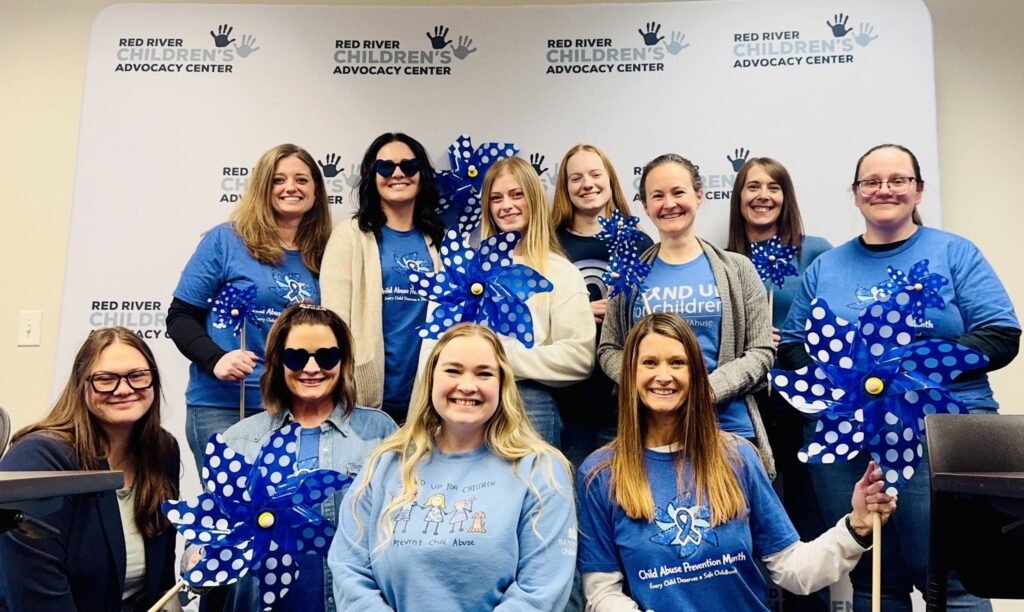
As more children needed help, we knew working harder was not enough. We had to build capacity. Together through some pretty difficult months, our team expanded from 6 employees to 17, opened a fully accredited location in Devils Lake, relocated both our Fargo and Grand Forks offices into child-friendly and ADA-accessible facilities, expanded prevention education efforts, launched Medicaid billing, and increased access to trauma-informed mental health services.
Also, we now provide support across 67 counties in North Dakota, Minnesota, and South Dakota. While the number of cases in some rural areas remains smaller, we are committed to maintaining a strong presence for partners and families throughout the region and continuing to strengthen and expand those MDT partnerships.
What makes me most proud is that we accomplished this growth without losing sight of quality. Our team remained committed to providing compassionate, specialized care while navigating rapid organizational growth, facility moves, new systems, accreditation requirements, and increasing service demands.
Seeing what our staff accomplishes every day to help these children heal is something I am tremendously proud of, and looking back at the last 4 years, I know they are too.
What about your work inspires you and keeps you going?
What inspires me and keeps me going is knowing that our work changes the trajectory of a child’s life, forever. Every day, we help children and families move from crisis toward healing, and that is an incredible responsibility and privilege that I do not take lightly.
I understand firsthand how important it is for a child to have safe adults who believe them, support them, and help them heal. I wake up each day ready to lead a team that provides this support while facing some of the most difficult circumstances imaginable and it is deeply meaningful and motivating.
On top of that our team is truly incredible. They are strong, compassionate, and deeply committed to helping children and families heal. I am grateful for the opportunity to support them in whatever way they need so they can continue doing this important work. Their resilience, dedication, and commitment to our mission, that keeps me going. They are a constant source of inspiration to me.
What’s the biggest need for kids you think we can meet in the next five years?
I believe one of the biggest needs we can address is increasing access to trauma-informed mental health services and early prevention education. Too many children, especially those in rural communities, face barriers to receiving the support they need after experiencing trauma. Over the next five years, I hope we continue expanding access to specialized mental health care, prevention education, and early intervention services so children can receive help sooner and begin healing faster.
Beyond services, children need responsible, trusted, and caring adults who are willing to protect them. They need parents, caregivers, educators, coaches, and community members who can recognize red flags, have difficult conversations, and take action when something doesn’t seem right. Adults should feel empowered to ask questions about policies, procedures, training, and supervision practices at camps, schools, childcare centers, sports programs, and other activities children participate in. Children are one of our most vulnerable populations, and every organization that serves them should be prepared to create safe environments where they can learn, grow, and thrive.
If we can increase access to mental health services while also equipping the adults in our community with the knowledge and tools to better protect children, I believe we can make a significant impact on the safety and well-being of children over the next five years.
What do you think the ideal future looks like for kids?
The ideal future for children is one where they feel safe, valued, and comfortable talking openly about their lives. I envision a future where children can have honest conversations about their bodies, relationships, struggles, fears, mental health, and personal safety with trusted adults and peers without fear of judgment, embarrassment, or stigma.
Too often, discussions about difficult topics are avoided because they make people uncomfortable. Children may worry they will be seen as weak, dramatic, or complaining when, in reality, these are exactly the conversations that help build healthy relationships, resilience, and safety. We should have started normalizing these conversations decades ago. I know I could have benefited from early education.
I envision households, schools, and communities where open education and communication is the norm. Where children know they can ask questions, express concerns, and seek help at any time. When families and communities are willing to talk openly about difficult topics, we break down communication barriers, strengthen relationships, and create environments where children are more likely to speak up when they need support.
Ultimately, my hope is for a future where every child has trusted adults in their corner, where difficult conversations are welcomed rather than avoided, and where children grow up knowing that their voice matters.

What’s next for you?
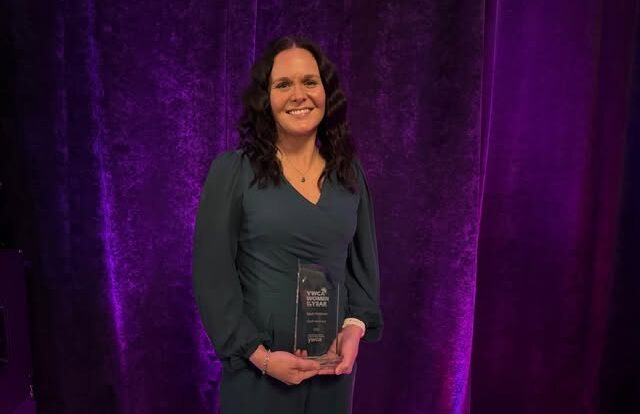
Professionally, I am focused on continuing to grow the impact of RRCAC and expanding our reach across the region. While providing high-quality intervention and treatment services will always be a priority, I am increasingly passionate about prevention and finding ways to stop abuse before it happens.
In the coming years, I hope to expand community education efforts, strengthen prevention programming, and build sustainable resources that allow us to serve even more children and families. I want to help create communities where every adult understands their role in protecting children and every child has the knowledge and support they need to stay safe.
I hope to continue learning, growing as a leader, and using my experiences to advocate for meaningful change. My goal is to help build systems that not only respond to abuse but actively work to prevent it.
________________________________________________________